
What Kansas Court Dockets Mean
A docket, often called the register of actions in Kansas, is the court's chronological index of a case. It records that a petition, complaint, answer, motion, notice, return of service, hearing, continuance, journal entry, order, judgment, sentencing event, warrant event, or appeal activity occurred. The docket may show dates, event text, judicial assignment, and links to public electronic documents. It is not a verbatim transcript, and a short entry cannot replace the filed paper it describes.
District Court is Kansas's general trial court. Each county's Clerk of the District Court maintains that county's docket even when judges and staff work across a multicounty judicial district. District magistrate judges sit within District Court, so their entries stay in the district file. Municipal courts instead keep city ordinance dockets, including many traffic and city misdemeanor cases. A municipal appeal can create a new District Court docket, but it does not make the original city record part of a universal statewide city index.
Note: A Kansas docket entry identifies activity, while the signed or filed document supplies the complete language and legal effect.
Find Kansas Court Dockets Online
The Kansas District Court Public Access Portal provides statewide district case information, including public events. Search a full case number when possible. A name search should be narrowed by court location, case type, status, and filing dates. Compare the county, party role, year, and caption before accepting a match. A shared name is not proof that the record concerns a particular person.
- Identify district, municipal, appellate, bankruptcy, or federal district court from the notice, citation, or case number.
- For a Kansas district case, search the statewide portal by full number or party name and narrow to the filing county.
- Open the case events or register of actions, then compare hearing and party details with the source record.
- Check each charge or claim's outcome and open any available public document. Do not rely only on a broad closed label.
- If an entry has no document link, contact the filing clerk or use the courthouse public terminal.
Document images generally begin after the court's Kansas eCourt conversion date. A missing icon can mean preconversion paper, terminal-only access, a restricted attachment, a sealed record, or a document that was never filed. The official Smart Search guide addresses search syntax and legacy cases. Use the county directory to reach the clerk when the online Kansas docket is incomplete.
The Judicial Branch also provides eFlex electronic filing.
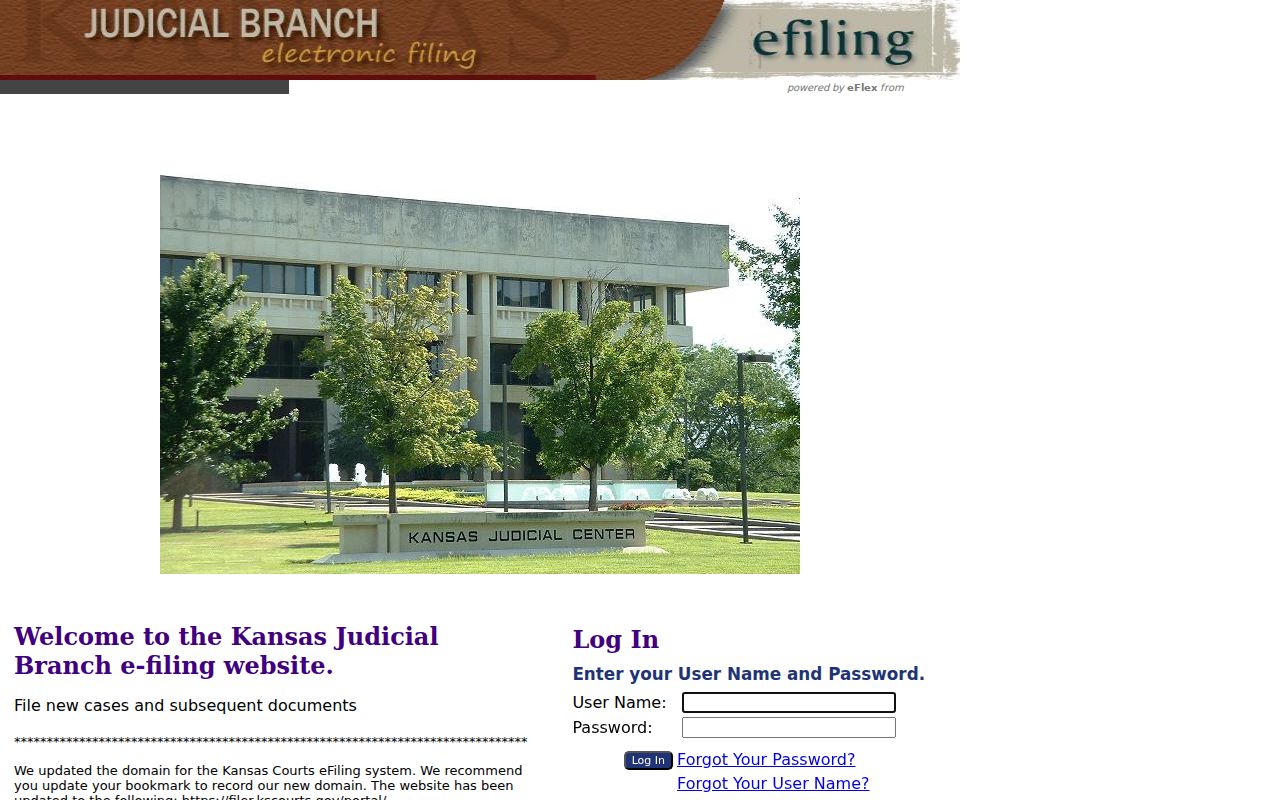
eFlex submits documents for authorized users. It is not the public docket search, and a filed item should be checked on the official case docket.
Read Kansas Court Docket Entries
Kansas portal labels and legacy coding can vary, so the displayed event text controls. The stable concepts below show how a public docket functions. A live hearing date can change quickly and should be confirmed with the clerk. Financial fields may omit another case, a collection allocation, later interest, or an unposted payment.
| Field or event | What It Shows |
|---|---|
| Case header | Case number, filing county, type, filing date, and broad status. |
| Initiating entry | Complaint, petition, information, indictment, or appeal notice received by the clerk. |
| Service or return | Process issued and the later result of an attempt to serve or execute it. |
| Motion | A party's request for court action, which remains undecided until an order is entered. |
| Hearing | Date, time, type, location, and judicial officer when publicly displayed. |
| Journal entry or order | The court's ruling, judgment, sentence, dismissal, or other operative decision. |
| Postjudgment event | Appeal, mandate, satisfaction, revocation, modification, or reopening that may alter the result. |
| Document link | A public electronic image when the record and internet-access rules permit it. |
Filed records receipt, while issued means the court or clerk generated process. A return reports the attempt or result. A motion asks; an order decides. Continued moves a proceeding. Taken under advisement means the judge has not yet ruled. Remanded sends a matter back, and an appellate mandate makes the higher court's disposition effective below. In a criminal docket, read every count because one may be dismissed while another ends in conviction or diversion.
Kansas Courts and Docket Sources
The statewide portal covers public Kansas District Court case information. Appellate opinions and docket material follow Judicial Branch appellate procedures. Municipal courts are city systems and can require a city portal, telephone call, written request, or counter visit. No statewide district search is a full municipal ticket or warrant search. Specialty drug, veterans, behavioral-health, DUI, and family treatment dockets remain part of their underlying district or municipal case, and confidential treatment facts can be withheld.
- Kansas Supreme Court: appellate resources provide opinions and public docket material; the appellate clerk handles certified records.
- Kansas Court of Appeals: one statewide appellate court hears most district appeals in three-judge panels.
- Kansas District Court: Smart Search and the filing county's Clerk of the District Court provide case events and public documents.
- Municipal Court: the issuing city's municipal clerk keeps original ordinance and traffic dockets.
- Federal courts: PACER and the relevant federal clerk supply separate federal dockets.
Every courthouse reserves a public-search computer for records in that court. It may offer lawful documents that are not internet-accessible, but it cannot override sealing. For an old docket, give the clerk the caption, exact or legacy number, court, county, approximate year, and event or document sought.
Kansas Docket vs. Case File
A docket is the chronological map. The full file holds pleadings, motions, orders, judgments, and any exhibits retained as court records. Transcripts and recordings are not automatic portal PDFs. A request may go through the clerk or reporter and require the hearing date, judge, case, requested portion, estimate, and deposit. Exhibits can be sealed, returned, retained under special limits, or destroyed under a schedule. A public hearing does not make every exhibit downloadable.
| Question | Docket | Full Case Record |
|---|---|---|
| Purpose | Indexes events in time order | Preserves filed documents and orders |
| Contents | Date, event label, short text, status | Pleadings, motions, judgments, retained exhibits |
| Online access | Often visible as case information | Depends on conversion and access rules |
| Proof | Useful locator and history | Signed or certified paper establishes official text |
| Correction | Ask the filing clerk about the entry | Use clerk or court procedure for the document |
A certified complaint confirms that the copy came from the court file, not that its allegation is true. For an outcome, request the signed judgment, sentence, dismissal, final civil order, divorce decree, or current probate appointment that answers the question.
Interpret Kansas Docket Status
ROA commonly means register of actions, and JO may appear locally for a journal entry or order, but Kansas legacy and portal labels are configuration-dependent. Use the complete displayed text. Pending or open can coexist with disposed counts. Closed can coexist with restitution, collection, probation, a later motion, or an appeal. Dismissed does not mean erased. Inactive does not necessarily mean sealed. A future hearing entry does not guarantee the setting remains unchanged.
Identify the exact event date and outcome. In a criminal case, separate offense, arrest, filing, plea, disposition, sentence, and custody dates. In civil litigation, look for service, final judgment, later stay, appeal, vacation, and satisfaction. A motion has no effect merely because it appears. The later order decides it. For a live deadline or appearance, call the clerk rather than relying on a cached docket.
Note: The latest Kansas docket entry may not be final if an appeal, remand, satisfaction, or modification follows.
Search Federal Dockets in Kansas
Federal dockets are separate from Kansas state dockets. The U.S. District Court for the District of Kansas covers the entire state and hears federal criminal, civil-rights, diversity, and federal-statute cases. It uses a different clerk and case number from Kansas District Court.
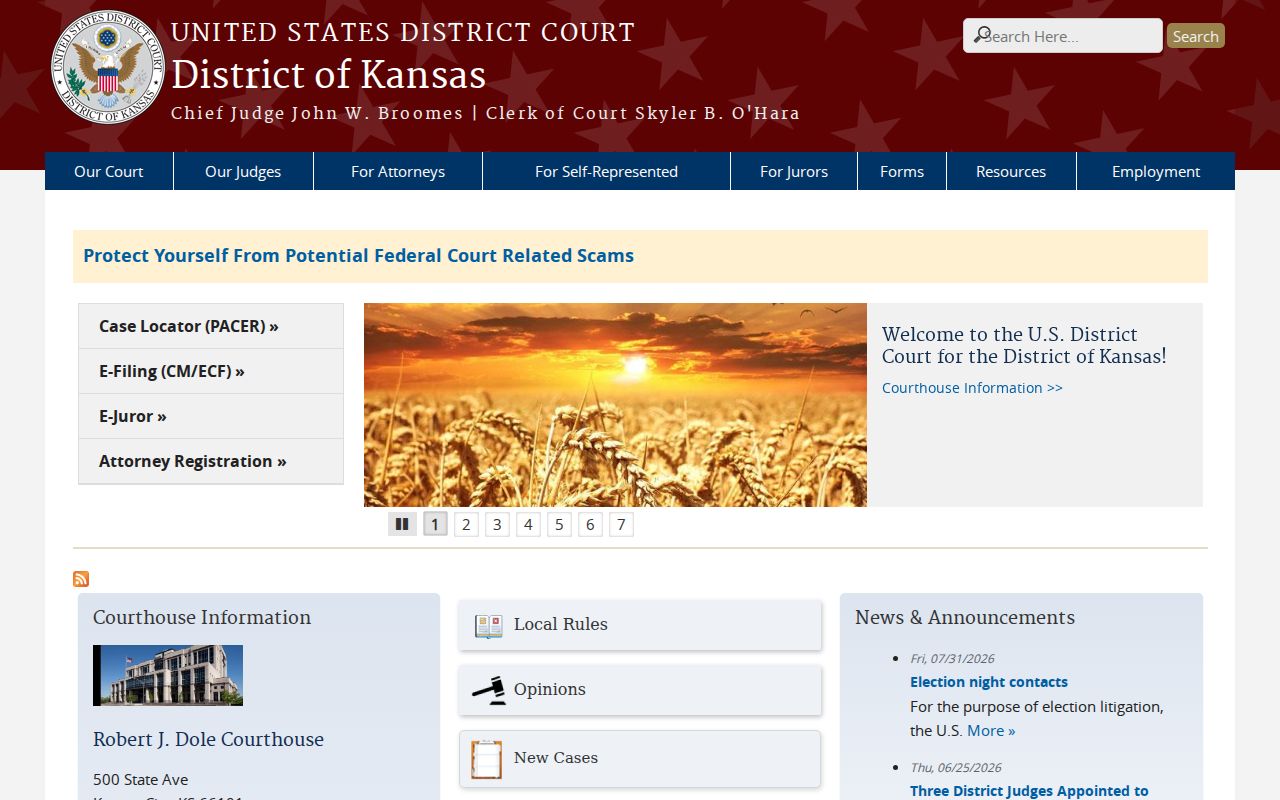
The federal court site supplies local rules and clerk information, while the official docket and filed documents are searched through PACER and CM/ECF.
Bankruptcy cases use the U.S. Bankruptcy Court for the District of Kansas.
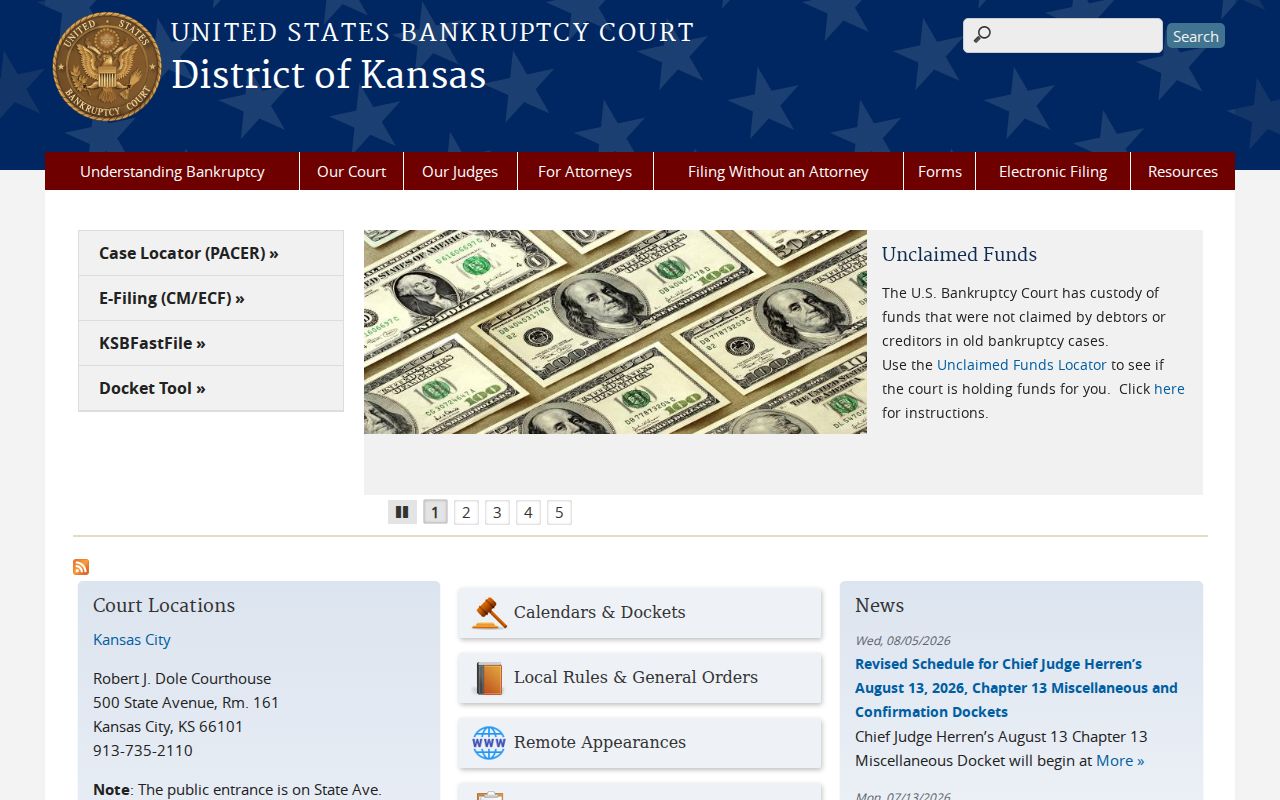
A bankruptcy docket can include the petition, schedules, claims, trustee reports, motions, orders, and discharge, with private data redacted or restricted.
PACER Case Locator searches federal appellate, district, and bankruptcy cases by court, number, party, filing date, and type.
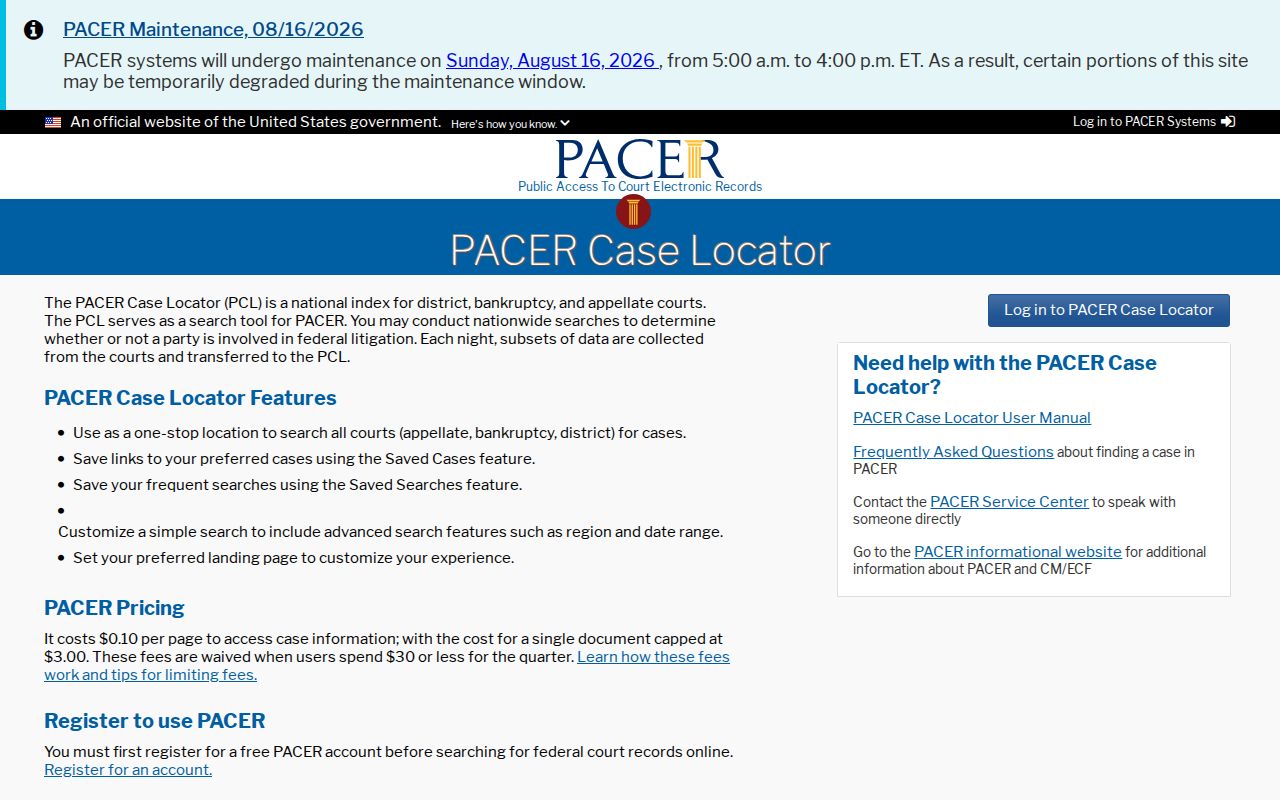
The locator identifies a federal case, after which the docket opens in the filing court. An account and current PACER fee rules apply.
The official PACER service provides docket reports and public federal documents.
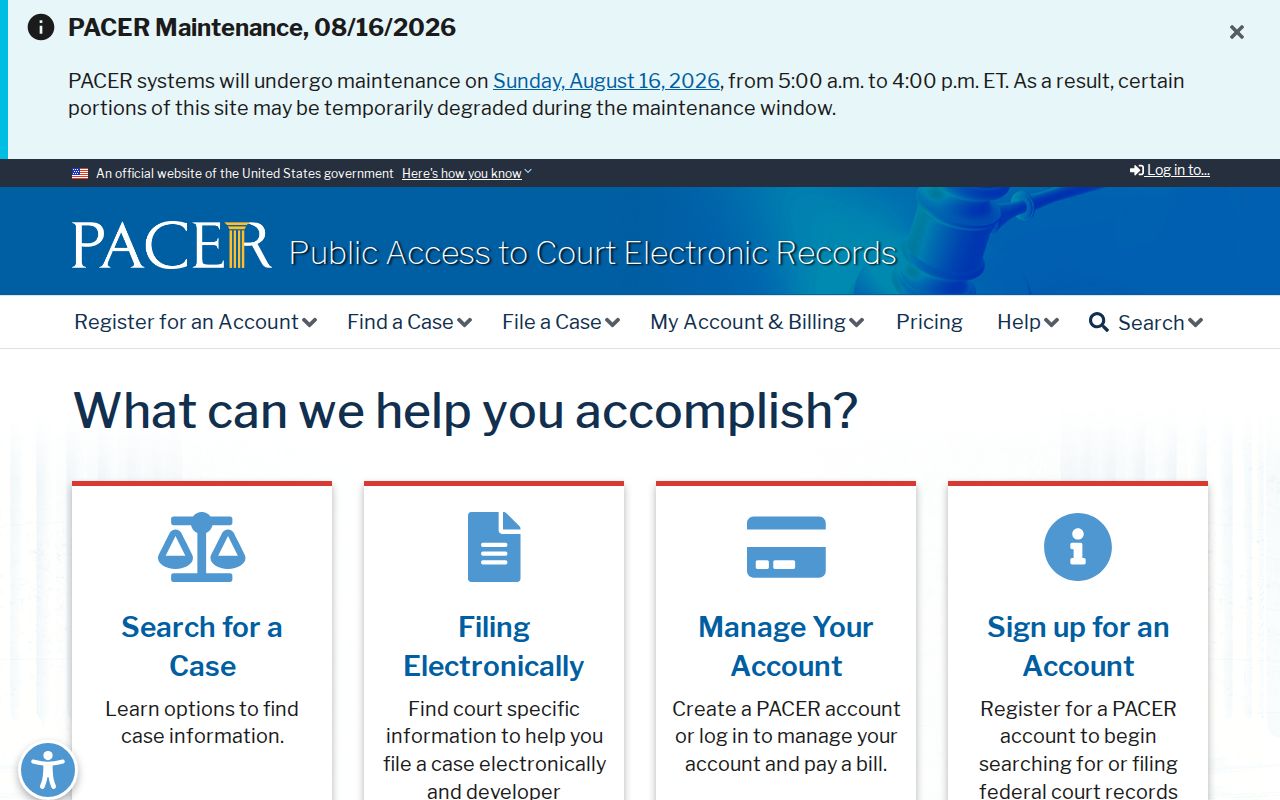
Sealed filings, grand-jury material, and restricted personal data remain unavailable. Certified copies come from the federal clerk, not a Kansas state clerk.
Get Kansas Dockets by County
Choose the county where the district case was filed in the directory of all 105 Kansas counties. Ask the Clerk of the District Court for a public docket, specific event, plain copy, or certified order. Provide the caption, number, year, case type, document title, preferred format, and maximum cost. If a city issued the charge, contact that municipal court first. Kansas county clerks are election and county-government officers, not custodians of district case files.
For a missing PDF, ask whether the item is preconversion, courthouse-only, archived, restricted, sealed, or never filed. This direct question prevents a portal gap from being mistaken for a missing case.